When Jaden told us they were done eating meat, the very first worry in my head was protein. It’s the first thing almost every parent asks, and for good reason. We grew up hearing that meat is where protein comes from, and nobody wants their kid running on empty.
In my first post, I said to save the nutrition talk for later, when you have real information. This is that later. Here’s what I found out, and the good news is that protein turned out to be the easy part.
How much protein does a kid actually need?
Less than most of us think. The recommended amount is around 34 grams a day for kids ages 9 to 13, and roughly 46 to 52 grams for teens. A lot of kids already get more than that without trying.
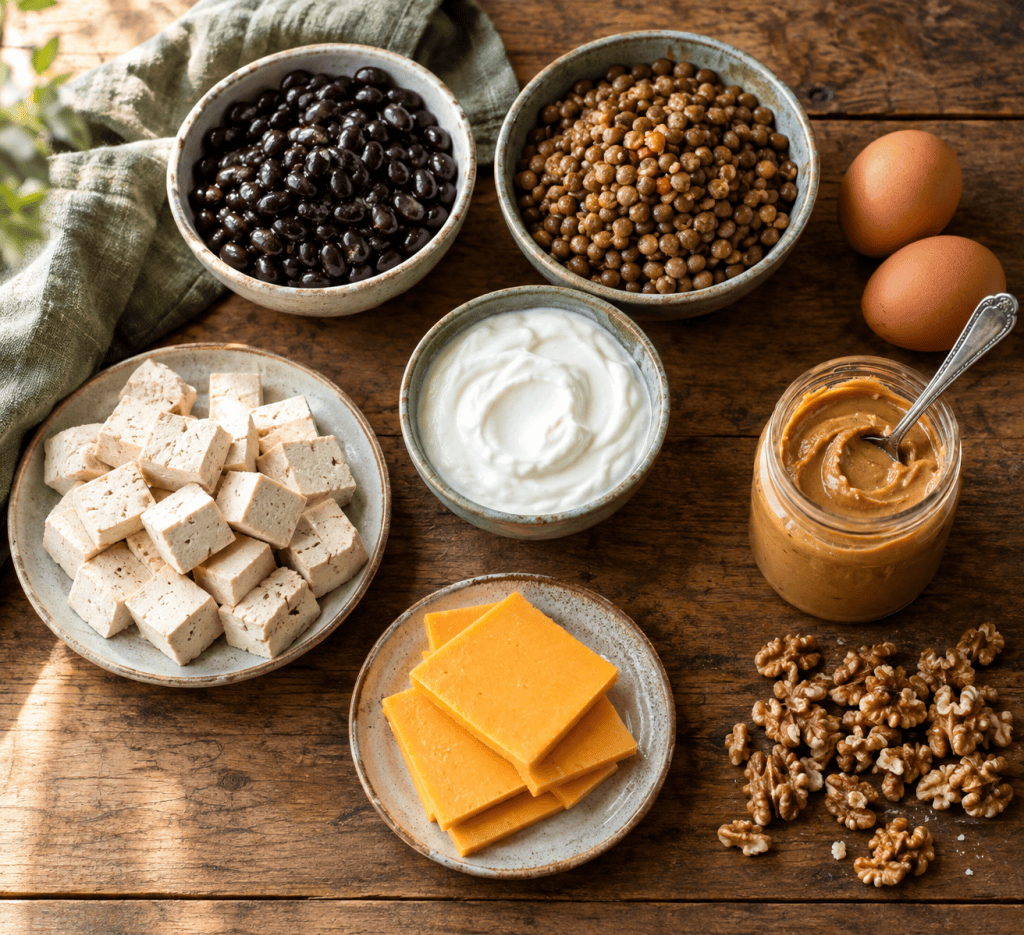
To put it in perspective, here’s roughly what some everyday foods bring to the table:
- 1 egg: about 6 grams
- 1 cup of milk: about 8 grams
- ¾ cup plain Greek yogurt: about 15 grams
- 2 tablespoons peanut butter: about 7 grams
- ½ cup black beans: about 7 grams
- 1 cup cooked lentils: about 18 grams
- 1 ounce cheddar cheese: about 7 grams
- 3 ounces firm tofu: about 8 to 10 grams
What a normal day can look like
No protein powders, no special shopping trip:
- Breakfast: Scrambled eggs and toast
- Lunch: Peanut butter sandwich, a cheese stick, and an apple
- Snack: Greek yogurt with granola
- Dinner: Pasta with tomato sauce and white beans
That day lands well above what a teen needs. The trick isn’t finding some rare food. It’s just making sure there’s a protein source at each meal, the same way you would for anyone.
The things that actually deserve your attention
Here’s what surprised me. Protein was the thing I worried about, but it wasn’t the thing to watch most closely. These are:
- Iron. Plant iron is harder for the body to absorb. Pair beans, lentils, spinach, and fortified cereal with something high in vitamin C, like tomatoes, peppers, or orange slices.
- Vitamin B12. This one only comes naturally from animal foods. Dairy and eggs cover it for most vegetarian kids. If your kid goes fully vegan, a fortified food or supplement is a must.
- Calcium and vitamin D. Easy with dairy. Without it, look for fortified plant milks.
- Zinc. Found in beans, nuts, seeds, whole grains, and dairy.
- Omega-3s. Walnuts, chia seeds, and ground flaxseed help here.
I’ll be honest: we never checked with Jaden’s doctor about any of this. It worked out fine for us, but if I were doing it again, I’d bring it up at the next checkup, just for peace of mind. A pediatrician can tell you if anything needs a closer look, and it helps your kid hear it from someone other than Mom or Dad.
Major dietitian groups agree that a well-planned vegetarian diet works fine for kids, and “well-planned” mostly means paying attention to that short list.
Where Base and Branch comes in
This is where cooking one dinner instead of two really pays off. When the base of the meal already has protein in it, everyone at the table is covered, and the meat becomes an add-on instead of the main event.
- In our Tuscan tomato pasta, the white beans go in the base, and the sausage branches off at the end.
- On burger night, the black bean burgers hold their own right next to the beef.
- On taco night, a pan of seasoned beans sits next to the meat, and everyone builds their own.
Put the protein in the base, and you’ll stop worrying about it.
The short answer
Where will they get their protein? From eggs, dairy, beans, lentils, tofu, nuts, and whole grains, the same places a lot of the world already gets it. Keep an eye on iron and B12, check in with your pediatrician for peace of mind, and keep cooking together.
Want the whole plan?
Everything I learned the hard way is in my book, My Kid Went Vegetarian, Now What? It covers what your kid actually needs to stay healthy, the Base and Branch method for cooking one dinner instead of two, school lunches, grandparents, and 40 family-friendly recipes.
And if you’d like a place to plan your family’s meals, my companion planner, The Flexitarian Kitchen Planner, was built for exactly that.
Get a Free Week of Base and Branch Dinners
Seven weeknight dinners that split into plant-based and traditional, plus a shopping list for the whole week. Free, straight to your inbox.

